_edited.png)
Safe Work at Height: Embracing Modern Solutions Beyond Ladders for UK Compliance and Safety
Working at height remains one of the most hazardous activities in many industries across the UK. Despite the risks, ladders continue to be the default choice for many tasks. Yet, UK legislation and guidance strongly encourage moving away from ladders towards safer, more secure alternatives. This post explores why modern solutions like podium steps, mobile elevating work platforms (MEWPs), and alloy towers with edge protection offer better safety and compliance. It also provides practical advice on planning work at height to reduce falls and injuries.
Understanding the Risks of Using Ladders
Ladders are often seen as quick and easy tools for working at height. However, statistics from the Health and Safety Executive (HSE) show that falls from ladders cause thousands of injuries and hundreds of fatalities each year in the UK. The main risks include:
Instability: Ladders can slip or tip if not positioned correctly.
Lack of edge protection: Users are exposed to fall hazards without guardrails.
Limited working space: Standing on a ladder restricts movement and balance.
Incorrect use: Overreaching or carrying tools while climbing increases danger.
The HSE’s Work at Height Regulations 2005 require employers to avoid work at height where possible and, if not, to use the safest equipment available. This means ladders should only be used for low-risk, short-duration tasks.
UK Legislation and Guidance on Work at Height
The Work at Height Regulations 2005 set out clear duties for employers and workers to manage risks when working above ground level. Key points include:
Avoid work at height if possible: Use alternatives such as working from the ground or using extendable tools.
Use suitable equipment: When work at height cannot be avoided, select equipment that prevents falls.
Plan and supervise work: Assess risks, plan the task, and ensure competent supervision.
Provide training: Workers must be trained to use equipment safely.
Maintain equipment: Regular inspections and maintenance are essential.
The HSE also publishes guidance documents like INDG401 and L22, which recommend moving away from ladders towards safer platforms and towers with guardrails.
Safer Alternatives to Ladders
Podium Steps
Podium steps are stable platforms with handrails and guardrails that provide a secure working area. They are ideal for tasks requiring frequent access at low heights, such as maintenance or stock picking.
Benefits:
Stable base with non-slip surfaces
Guardrails prevent falls
Easy to move and set up
Suitable for indoor and outdoor use
Mobile Elevating Work Platforms (MEWPs)
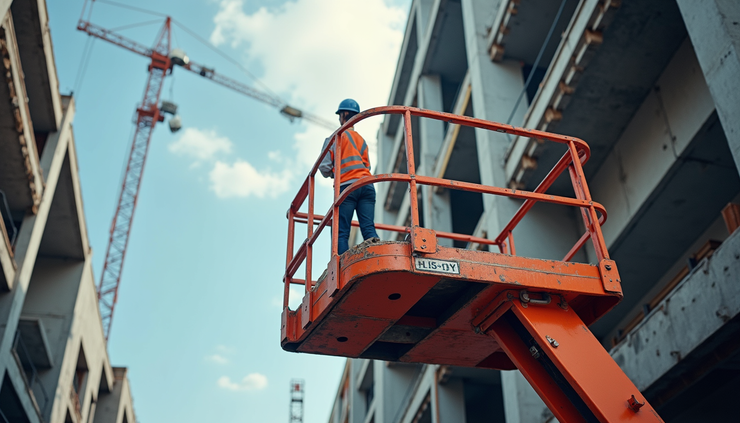
MEWPs include cherry pickers and scissor lifts that raise workers safely to height. They offer a large, secure platform with edge protection and controls to adjust height precisely.
Benefits:
Full edge protection with guardrails
Adjustable height for various tasks
Safe access via gates or steps
Reduces manual handling risks
Alloy Towers
Alloy towers are lightweight, modular scaffolding systems with guardrails and toe boards. They provide a large working platform and can be assembled to different heights.
Benefits:
Strong and stable with edge protection
Flexible configurations for different tasks
Easy to transport and assemble
Suitable for longer duration work
Planning Work at Height Safely
Effective planning is crucial to reduce risks when working at height. Follow these steps:
Assess the task: Identify the height, duration, and complexity.
Choose the right equipment: Select podium steps, MEWPs, or alloy towers over ladders whenever possible.
Check the environment: Ensure the ground is stable and free from hazards.
Train workers: Confirm all users are competent with the chosen equipment.
Use edge protection: Guardrails and toe boards must be in place to prevent falls.
Supervise and monitor: Keep an eye on work progress and safety compliance.
Inspect equipment: Before use, check for damage or faults.
Practical Examples of Safer Work at Height
A warehouse switched from ladders to podium steps for stock picking. This reduced slips and falls by providing a stable platform and handrails.
A construction company replaced ladders with MEWPs for roof access. Workers reported feeling safer and more comfortable, improving productivity.
A maintenance team used alloy towers with guardrails for painting. The towers allowed longer work sessions without fatigue or risk of falling.
Benefits of Moving Away from Ladders
Choosing modern work at height solutions offers several advantages:
Improved safety: Edge protection and stable platforms reduce fall risks.
Better compliance: Aligns with UK legislation and HSE guidance.
Increased productivity: Workers can focus on tasks without worrying about balance.
Reduced injury costs: Fewer accidents mean lower insurance and downtime.
Enhanced worker confidence: Feeling safe boosts morale and job satisfaction.
Final Thoughts on Safe Work at Height
Ladders may seem convenient, but they carry significant risks that modern equipment can eliminate. UK legislation encourages employers to plan carefully and choose safer alternatives like podium steps, MEWPs, and alloy towers with edge protection. By adopting these solutions, businesses protect their workers, comply with regulations, and improve overall efficiency.
If you are responsible for work at height, start by reviewing your current practices. Consider investing in safer equipment and training your team. The effort will pay off in fewer accidents and a safer workplace.


Comments